


Background
The Leonberger takes his name from his hometown of Leonberg, Germany, where he first emerged during the 1800s. In the beginning he worked as a family and work dog, but the breed got so much attention from German artists that they often traded in these mundane tasks for the glamorous life of art models. Many parts of Europe embraced the trend and the Loenberger’s face wound up on several stamps of that time period.
The Leonberger was recognized by the American Kennel Club in 2010.
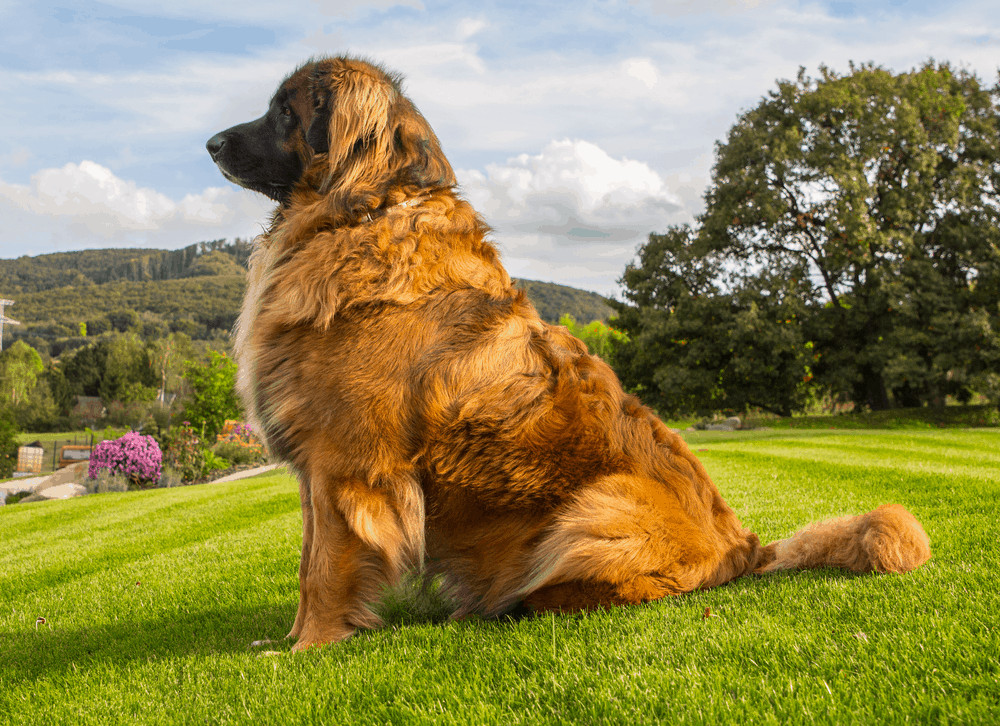
Sizing up
- Weight: 120 to 170 lbs.
- Height: 25.5 to 31.5 inches
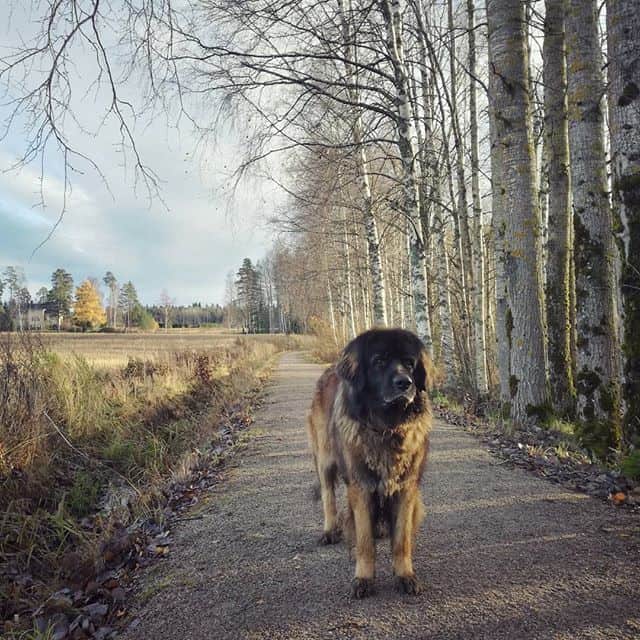
- Coat: Double coat, medium to long in length
- Color: Lion yellow and golden or reddish-brown
- Life expectancy: 6 to 9 years
What’s the Leonberger like?
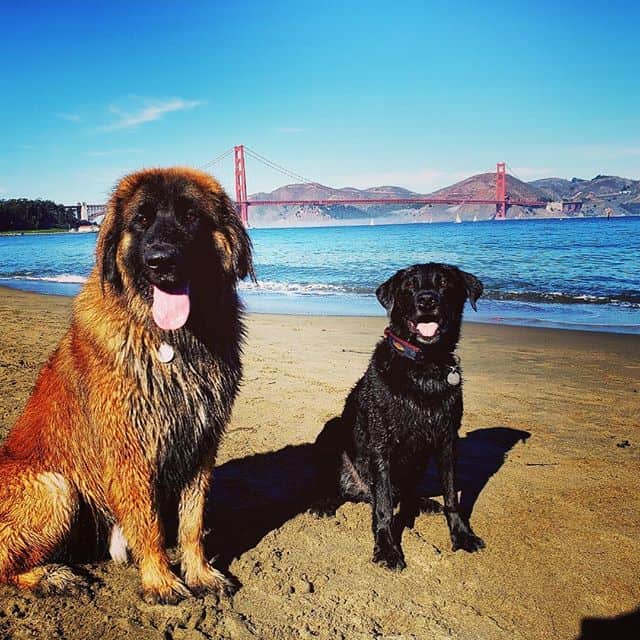
The Leonberger, while possibly intimidating, is very sweet. He is loyal, loveable, and very active. He will need plenty of daily exercise whether it’s going hiking or for a nice, long walk. But just because he enjoys the outdoors doesn’t mean he likes to be left alone out there—or anywhere. The Leo is extremely infatuated with his family and does not like to be away from them for long periods of time.
Training your Leo should begin right away if you want him to have the gentle traits that his breed is so well known for. Otherwise, he can be quite the handful. Socialization at an early age is also very important. You’ll need to be firm and consistent throughout all of it because he will test you when you let him. Make sure he knows you’re the alpha. Using positive reinforcements and food rewards will be integral to the process. If you follow this advice, your Leo will make a great friend for children.
The massive Leonberger has a lot of furs, so he will shed more frequently than your average dog. You’ll need to give him a very thorough brushing to remove any dead hairs before they end up on your furniture. He loves getting dirty so keeping up with regular baths will help his coat look extra shiny and beautiful.
Health
Larger breeds, like the Leonberger, are at a greater risk for several conditions.
Hip Dysplasia
- One of the most common diseases seen in dogs, with larger breeds being the most affected. It is ultimately a malfunction of the hip joints
Elbow Dysplasia
- The development of arthritis in the elbow joint
Hypothyroidism
- A disease caused by a decrease in metabolism due to an under-active thyroid hormone
Gastric Torsion/Bloat
- A condition in which a dog’s stomach rotates and twists; in some cases it can lead to cellular damage or organ death
Panosteitis
- A condition common to medium or large sized dogs that affects the bones in their legs causing a painful limping. Usually seen around 5 to 18 months of age
Osteosarcoma
- The most common bone tumor found in dogs. It is usually seen in larger breeds and can spread rapidly throughout the dog’s body
Leonberger Training
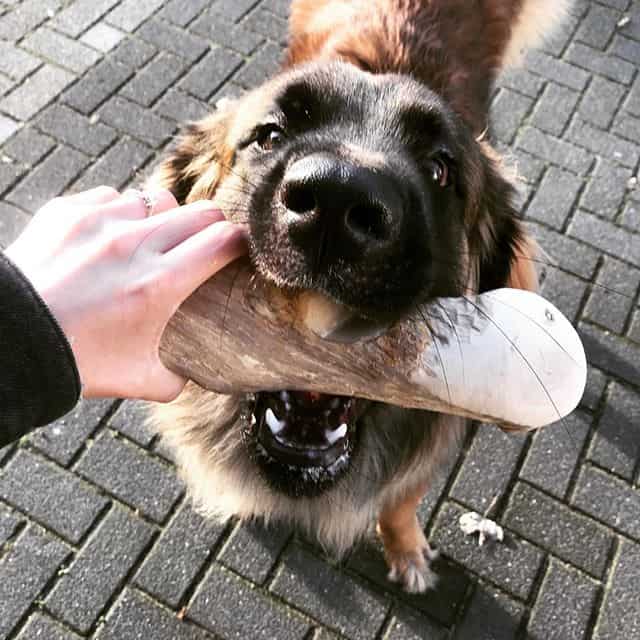
The Leonberger does not respond to harsh training methods; positive reinforcement is best. Patience is required. Early socialization and obedience training is highly recommended.
Leonberger Names
| Rank | Male | Female |
| 1 | Max | Bella |
| 2 | Charlie | Lucy |
| 3 | Buddy | Daisy |
| 4 | Cooper | Molly |
| 5 | Jack | Lola |
| 6 | Rocky | Sadie |
| 7 | Toby | Maggie |
| 8 | Duke | Sophie |
| 9 | Bear | Chloe |
| 10 | Tucker | Bailey |
| 11 | Oliver | Luna |
| 12 | Jake | Lily |
| 13 | Bentley | Roxy |
| 14 | Teddy | Zoey |
| 15 | Riley | Stella |
| 16 | Milo | Penny |
| 17 | Bailey | Coco |
| 18 | Buster | Gracie |
| 19 | Dexter | Zoe |
| 20 | Leo | Abbie |
| 21 | Winston | Ginger |
| 22 | Murphy | Ruby |
| 23 | Louie | Mia |
| 24 | Zeus | Sasha |
| 25 | Lucky | Lilly |
| 26 | Oscar | Rosie |
| 27 | Cody | Ellie |
| 28 | Harley | Nala |
| 29 | Jackson | Emma |
| 30 | Henry | Pepper |
| 31 | Baxter | Piper |
| 32 | Gus | Lulu |
| 33 | Jax | Lady |
| 34 | Sam | Annie |
| 35 | Sammy | Layla |
| 36 | Bandit | Riley |
| 37 | Bruno | Princess |
| 38 | Gizmo | Lexi |
| 39 | Diesel | Maya |
| 40 | Marley | Maddie |
| 41 | Ollie | Dixie |
| 42 | Jasper | Olive |
| 43 | Roscoe | Izzy |
| 44 | Beau | Roxie |
| 45 | Hank | Belle |
| 46 | Rusty | Angel |
| 47 | Shadow | Callie |
| 48 | Brody | Ella |
| 49 | Rocco | Cookie |
| 50 | Blue | Missie |
| 51 | Scout | Honey |
| 52 | Moose | Millie |
| 53 | Rex | Kona |
| 54 | Otis | Marley |
| 55 | Loki | Holly |
| 56 | George | Sandy |
| 57 | Finn | Shelby |
| 58 | Romeo | Dakota |
| 59 | Bo | Harley |
| 60 | Simba | Phoebe |
| 61 | Tyson | Scout |
| 62 | Apollo | Charlie |
| 63 | Boomer | Minnie |
| 64 | Tank | Callie |
| 65 | Hunter | Willow |
| 66 | Ziggy | Jasmine |
| 67 | Ace | Sugar |
| 68 | Joey | Athena |
| 69 | Thor | Winnie |
| 70 | Luke | Hazel |
| 71 | Peanut | Trixie |
| 72 | Samson | Mocha |
| 73 | Gunner | Josie |
| 74 | Chance | Peanut |
| 75 | Rufus | Sydney |
| 76 | Rudy | Katie |
| 77 | Oreo | Macy |
| 78 | Koda | Cleo |
| 79 | Prince | Fiona |
| 80 | Sparky | Shadow |
| 81 | Frankie | Baby |
| 82 | Benny | Allie |
| 83 | Chico | Hannah |
| 84 | Brutus | Mimi |
| 85 | Copper | Cocoa |
| 86 | Coco | Lacey |
| 87 | Chase | Bonnie |
| 88 | Chester | Madison |
| 89 | Kobe | Grace |
| 90 | Brady | Penelope |
| 91 | Cash | Delilah |
| 92 | Bubba | Nina |
| 93 | Bruce | Heidi |
| 94 | Ranger | Gigi |
| 95 | Maverick | Sally |
| 96 | Mickey | Lucky |
| 97 | Mac | Ava |
| 98 | Benji | Sassy |
| 99 | Scooter | Oreo |
| 100 | Chewy | Nikki |
Takeaway points
- The Leonberger would make a great hiking companion.
- The Leonberger is an excellent watchdog.
- The Leonberger can be great with children as long as they’re respectful.
- The Leonberger tends to shed a lot.
If you have any questions or concerns, you should always visit or call your veterinarian — they are your best resource to ensure the health and well-being of your pets.
9 Impressive Facts About the Leonberger
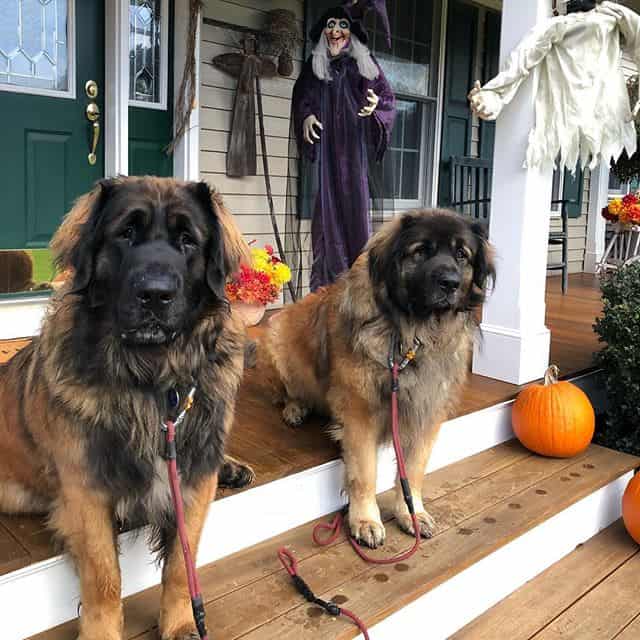
These cuddly dogs were bred to resemble lions, but they really look more like teddy bears. Learn more about these impressively large canines.
1. THEY HAIL FROM GERMANY.
Heinrich Essig, a noted politician, is generally credited with the creation of the Leonberger. The avid dog lover was known to trade somewhere between 200 and 300 dogs a year. A resident of Leonberg, Germany, he hoped to create a dog that resembled the lion on the town’s crest. In 1846, Essig announced that he had developed a new dog by crossing a Landseer Newfoundland with a Saint Bernard, and then a Pyrenean mountain dog. He named the new breed after his beloved hometown. He then left to promote the dog while his niece, Marie, bred and trained the dogs at home.
Essig claimed that his lion-like dogs only came from those three breeds, but today’s experts are skeptical. Many believe that the dog must have been made using a wider range of types to achieve its unusual looks.
2. THEY WERE LOVED BY THE RICH AND FAMOUS.

Essig was an amazing salesman who was able to smooth-talk his way into the homes of royalty and celebrities around the world. He also used his position on the town council to promote both his town and the dogs that shared the town’s name. Leonbergers were soon owned by Giuseppe Garibaldi, the Prince of Wales, King Umberto of Italy, and the Czar of Russia.
3. WORLD WAR I ALMOST WIPED THEM OUT.
As with many other breeds, war threatened to wipe out the Leonberger. In an effort to save them from extinction, two breeders named Karl Stadelmann and Otto Josenhans rounded up the last 25. Only five of the remaining dogs were fit to breed; still, Stadelmann and Josenhans managed to reinvigorate the line. In 1922, a group of seven people came together to start a formal breeding program, and by 1926, they had 360 Leonbergers.
4. YOU CAN TELL THE SEXES APART.

Leos are dimorphic, meaning that the female and male dogs are noticeably different. Males are bred to be more “masculine” and generally heftier dogs; on average they weigh about 132 pounds, while females weigh an average of 105 pounds.
5. THEIR LITTERS ARE (USUALLY) AVERAGE-SIZED.
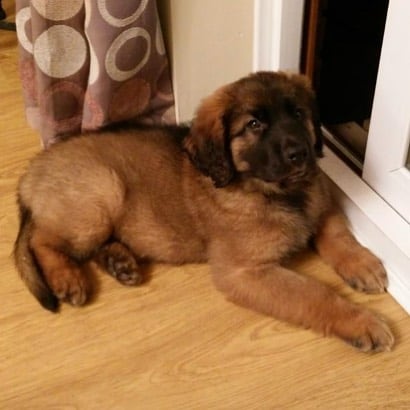
Typically, Leos don’t produce very many puppies at a time; litters have six puppies on average. In 2009, one Leonberger surprised its owners by giving birth to 18 puppies. Thought to be a breed record in the United States, the impressive number of pups kept their family very busy. The mother, named Ariel, had previously given birth to a litter of four puppies. Before she delivered her second, considerably larger litter, her owners were unable to tell how many puppies would be delivered, even with an ultrasound. “We knew it was at least 10,” they said.
6. THEY’RE IN TUNE WITH YOUR EMOTIONS.

Leonbergers are known to be a sensitive breed. It’s said that the kind dogs get visibly distressed when their family argues or otherwise expresses anger or sadness. Leos are bred as companion dogs, and enjoy being in the company of their owners. They don’t do well when left alone for long periods of time.
7. THEIR SENSITIVITY MAKES THEM GREAT THERAPY DOGS.
These gentle giants have excellent bedside manner. They are great with children and the elderly, showing an amazing amount of gentleness for a dog of their size. (Their stature also makes it easy for them to be petted from a hospital bed.) In 2002, the Leonberger Club of America started an award program to celebrate Leos and their owners for taking time to participate in therapy programs.
8. THEY SHED A LOT.

Leonbergers have a thick double coat that gives them their lion-like appearance. The coat can come in many different colors, such as yellow, sand, brown, and red, usually tipped with black. Even the texture of their coats can have variety. Thanks to their mane-like appearance, owners of the dog are likely to find a lot of hair around their homes. Frequent brushing is a must unless you want your house overrun with hairballs.
9. THEY MAKE GREAT SEARCH AND RESCUE DOGS.
It takes a special kind of dog—ideally, one with a powerful nose—to become a search and rescue dog. Leos are agile, well coordinated, and eager to please. In Canada, Germany, and other parts of Europe, the dogs are often used to find missing people. Thanks to their webbed feet, they’re great swimmers, which makes them perfect for water missions.


